
After three months of boxing, my coach finally said what I’d been both dreading and hoping to hear: "Right, you lot. Next Tuesday, we're doing controlled sparring. Light contact, nothing mad. Get yourself a gum shield if you haven't got one."
I should have been excited, but instead I spent the weekend overthinking and ended up panic-buying a basic boxing mouthguard from a sports shop for eight pounds. It came in a plastic case, said "mouldable" on the label, and looked right. I thought that was it.
That Tuesday night at the gym, I realised I had no idea how to choose a proper boxing gum shield.
My First Boxing Mouthguard Mistake (And What It Cost Me in Sparring)
The sparring wasn’t the issue. We did two-minute rounds, kept it light, and focused on keeping our guards up without going overboard. My partner was a good guy who’d been at the club about a year. He was patient, just wanting to practice his jab.
The real problem was the rubber chunk stuck in my mouth.
I followed the instructions: boiled the kettle, put the mouthguard in hot water, bit down, and cooled it under the tap. It seemed fine at home. But in the gym, with my heart racing and punches coming at me, it felt like I had a bath plug in my mouth.
It was too thick, and the edges rubbed my gums. I couldn’t breathe well through my nose because I was clenching my jaw to keep it in. Halfway through the first round, I gagged and had to turn away to spit it out.
"You alright?" my partner asked.
"Yeah, yeah. Gum shield."
I put it back in and finished the round feeling embarrassed. My coach didn’t say anything, but I could tell he noticed. That’s not what you want in your first real sparring session; messing with your gear instead of focusing on boxing.
Why Fit Matters in a Boxing Gum Shield
That night, I went home and finally did what I should have done earlier: I looked up what makes a good mouthguard for sparring.
I learned that "mouldable" doesn’t matter if the design is bad. A good boxing gum shield should fit snugly over your top teeth without gaps, stay in place without you having to bite down hard, and cover your teeth and gums without rubbing or feeling bulky.
The one I bought didn’t do any of that. It was a one-size-fits-all mouthguard that barely fit my teeth and never stayed in place. The material was thick and stiff where it shouldn’t be, and the edges didn’t mould to my gum line; they just sat there and irritated me.
I wasn’t after perfection. I just wanted something that wouldn’t distract me from learning to box. The fit was the most important thing. If it moves, rubs, makes you gag, or forces you to clench your jaw, it’s not protecting you; it’s just making sparring harder.
Why My Boxing Gum Shield Kept Slipping (And How I Fixed It)
I wasn’t ready to give up on boil-and-bite mouthguards. As a warehouse team leader, I don’t have money to waste. So I bought another one from a different brand, a bit pricier, with better online reviews.
This one fitted better. It was less bulky and moulded closer to my teeth. But it had a new problem: it kept slipping.
It didn’t fall out, but it shifted around, especially when I moved, breathed hard, or got hit. I’d feel it loosen and would clench my teeth to keep it in place. Then my jaw would ache, and I’d focus on the mouthguard instead of my footwork or keeping my right hand up.
One of the older guys at the gym, Danny, sparred with me one night and noticed me adjusting it between rounds.
"Mate, if you're biting down on it that hard, it doesn't fit."
That comment stuck with me. He wasn’t criticising, it was just clear to him. A boxing gum shield shouldn’t need you to bite down all the time. It should sit snug and secure so you can focus on boxing.
But I had already spent nearly twenty pounds on two different mouthguards, and neither worked. I wasn’t sure what to try next.
Comfort Problems
Looking back, the problems I had were very common for beginners who buy cheap boxing mouthguards. You might think "protection" just means thick rubber, but that’s not true. Real protection comes from a gum shield that stays in place and doesn’t force you to change how you breathe, move, or fight.
Here's what kept going wrong for me:
Too much bulk. Many cheap boil-and-bite gum shields are made with thick, clunky material that sits too far back in your mouth. This leads to gagging, mouth breathing, and feeling like you have a sock in your mouth.
Edges that don’t seal. If the mouthguard doesn’t mould properly around your gum line, the edges dig in or rub. You’re always aware of it. It’s not just annoying; it ruins your focus.
Slipping and movement. If it’s loose, you clench your jaw. If you do that for two minutes straight, your jaw is sore by the end of the round. And if you get hit while it’s out of place, it defeats the purpose of wearing it.
I wasn't being precious. I just wanted a boxing gum shield I could forget about while I was sparring. Comfort isn't a luxury when you're learning; it's basic functionality.
OPRO Instant Custom-Fit Mouthguard: The One That Finally Worked for Me
Danny told me he used an OPRO gum shield, which was a step up from the basic ones. "OPRO Instant Custom-Fit," he said. "It costs a bit more than the basic ones, but it’s worth it."
I was skeptical. I had already tried two "mouldable" mouthguards. How different could this one really be?
Turns out: very.
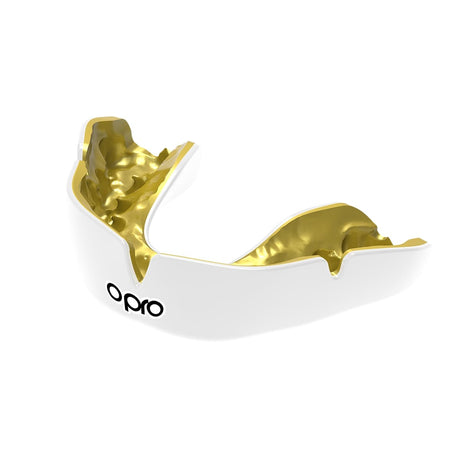
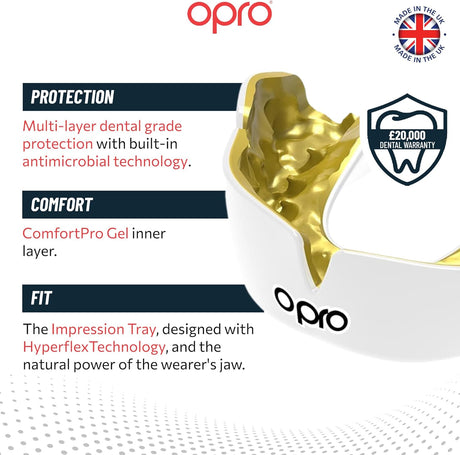
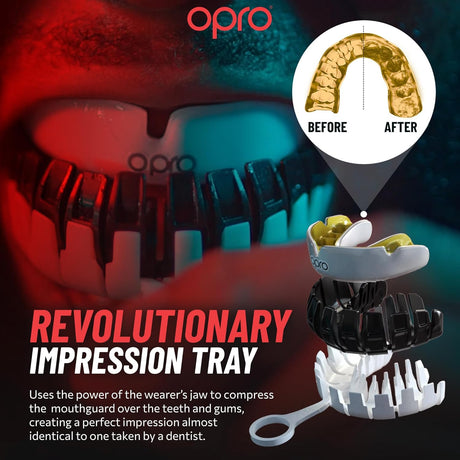
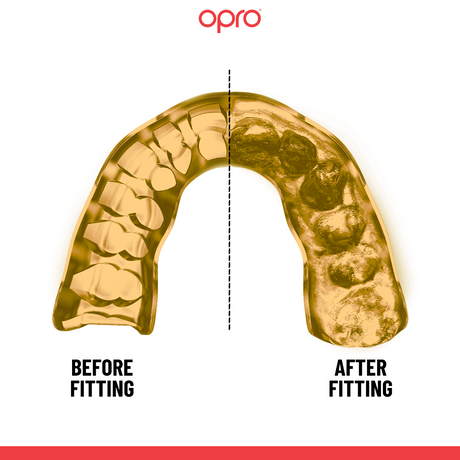
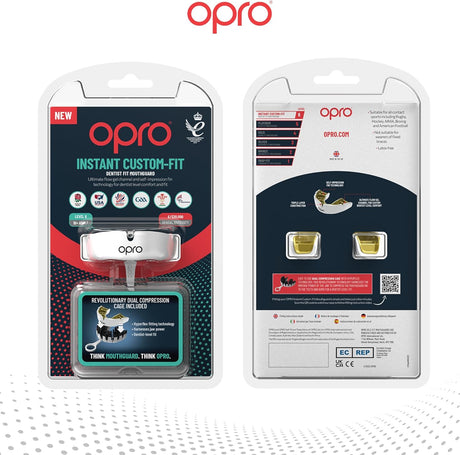
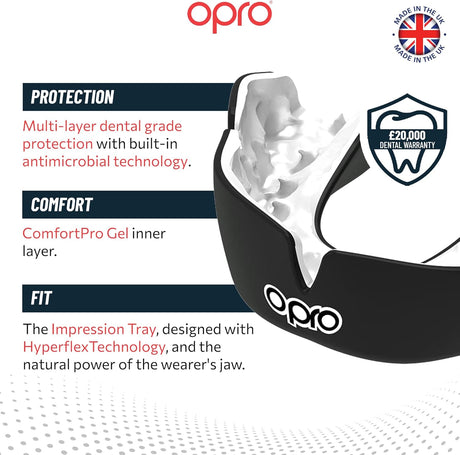
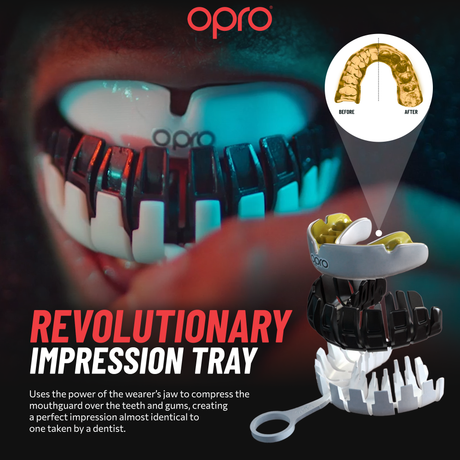
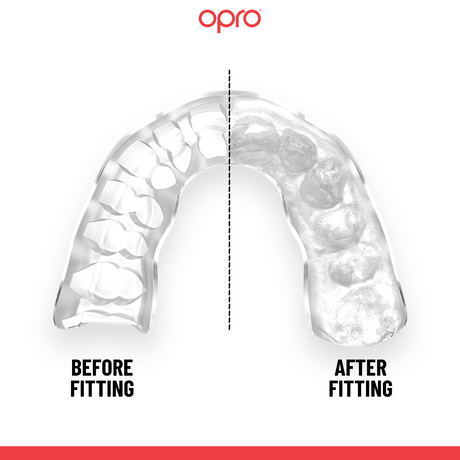
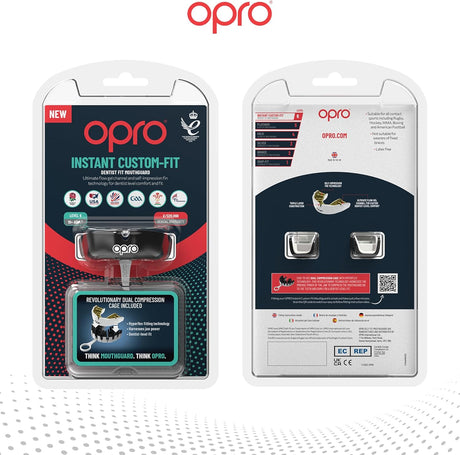
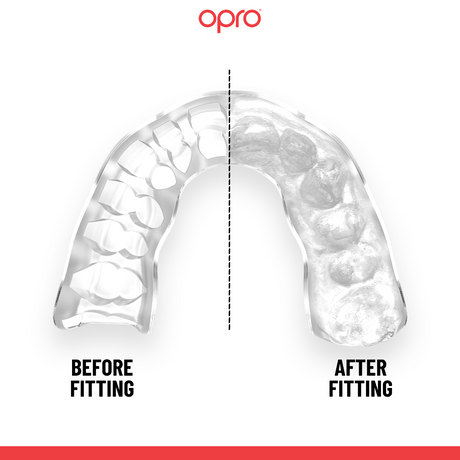
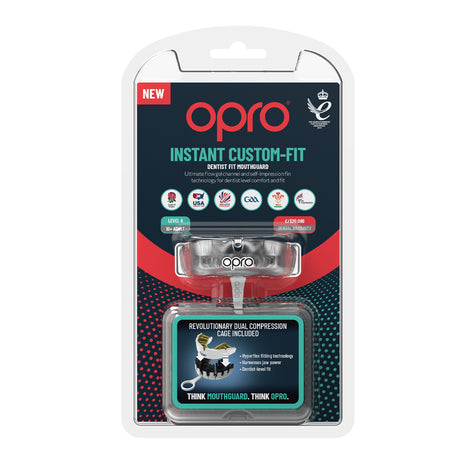
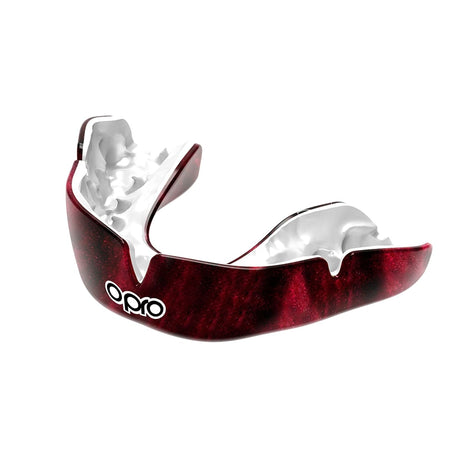
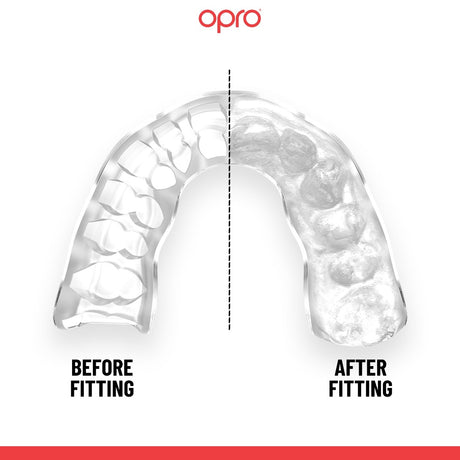
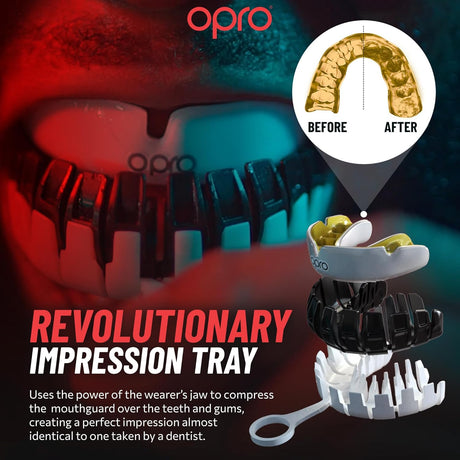
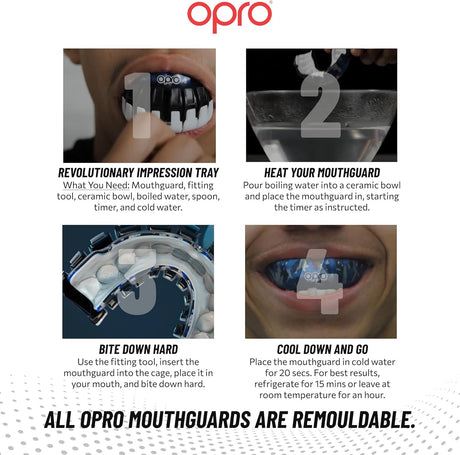
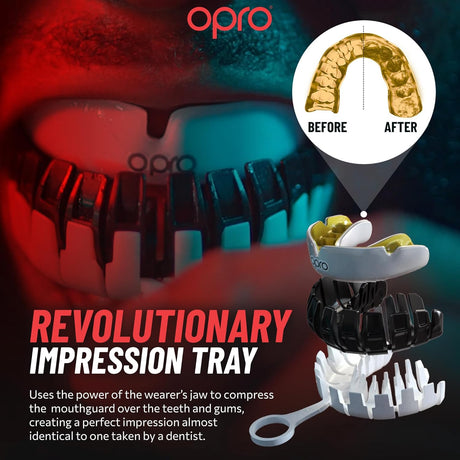
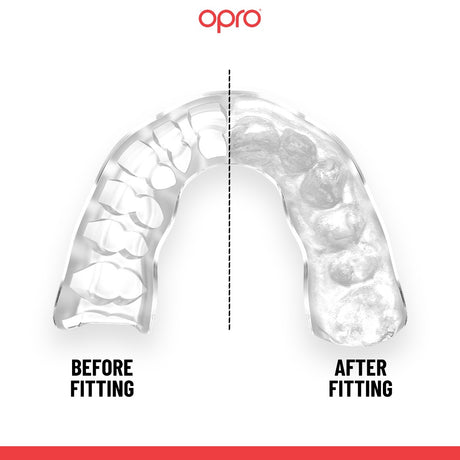
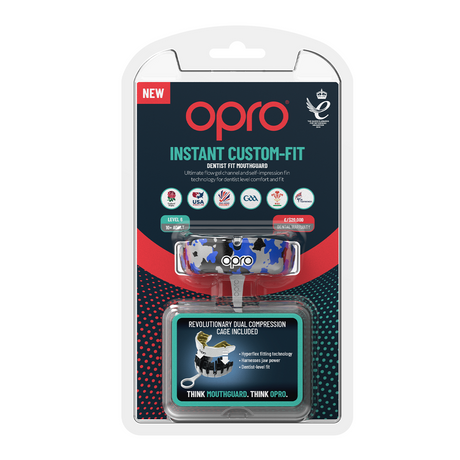
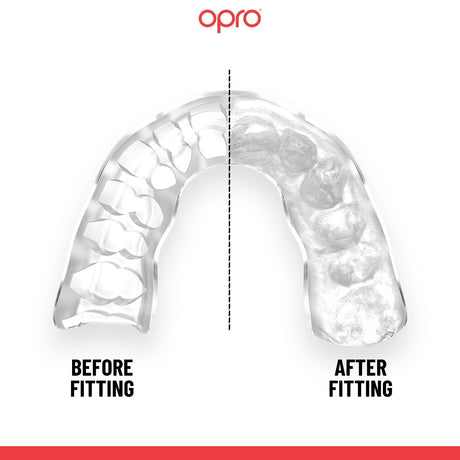
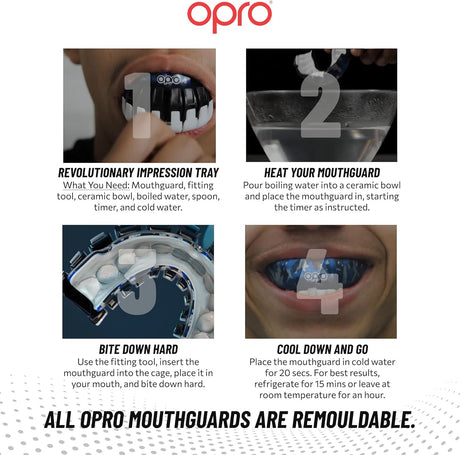
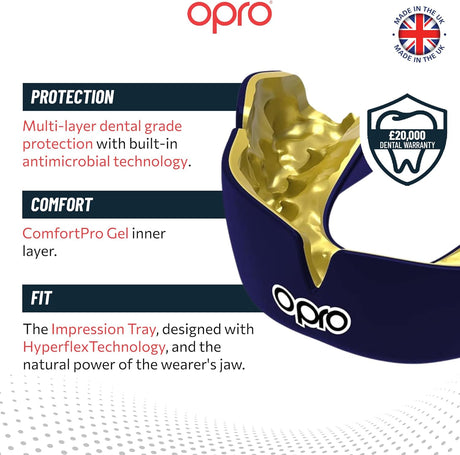
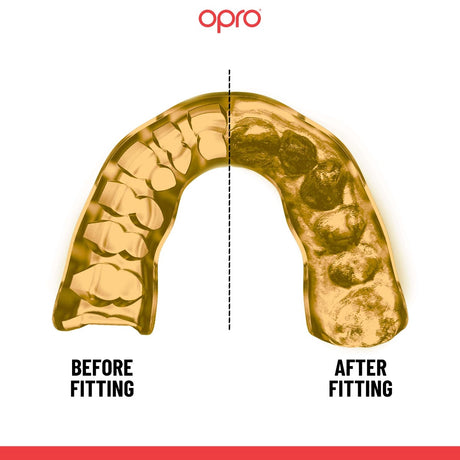
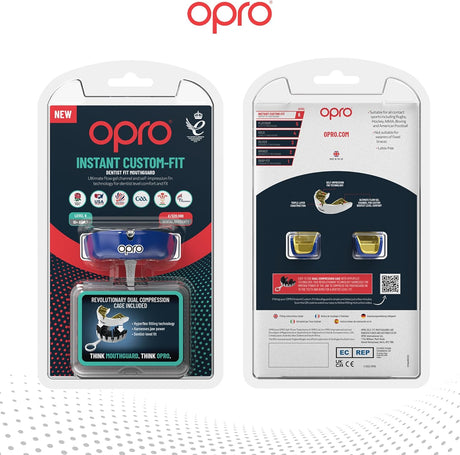
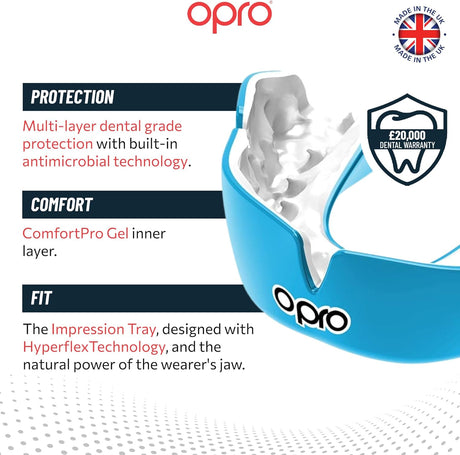
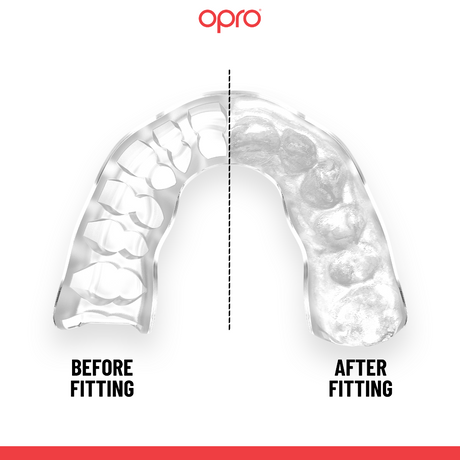
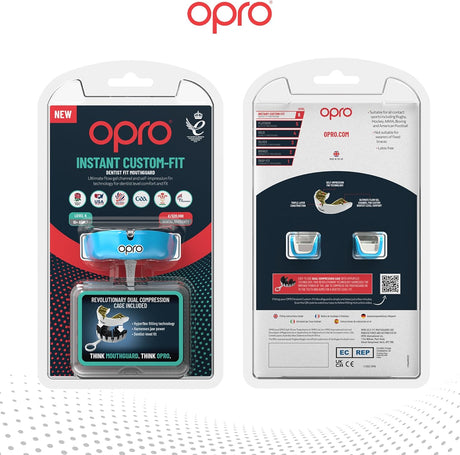
The OPRO Instant Custom-Fit mouthguard uses a different fitting system. It comes with a small tray you bite into while it’s soft. The tray gently pushes the gum shield around your teeth, giving you a proper impression rather than just a bite mark. You can still fit it at home with hot water, but the design actually moulds to your teeth and locks into place. Inside, it’s shaped to hug each tooth when you bite into the tray, so the fit is tight and even.
I ordered one online for about £30 and fitted it that night in my kitchen. The difference was clear right away. When I bit down as the instructions said, I could feel it grip my teeth, not just sit on them, but actually grip them. When I let go, it stayed in place. No clenching, no gaps, just secure.
The material was thinner than the cheap ones, but still protective. The edges sealed around my gum line without rubbing. And this was the big one, I could breathe normally through my nose without feeling like I was suffocating.
I brought it to sparring the next week. For the first time since I started, I forgot I was even wearing a mouthguard. It stayed in place and did its job while I focused on my boxing.
That’s how a proper boxing gum shield should feel.
Best Mouthguard for Boxing Beginners (What I'd Buy Again)
If you had asked me three months ago, I would have said to just buy the cheapest boxing mouthguard you can find. Why spend more?
Now I know better. A gum shield that doesn’t fit properly isn’t protecting you; it’s just a distraction. If your gear keeps distracting you, you’re not really learning to box. You’re just getting through sparring sessions.
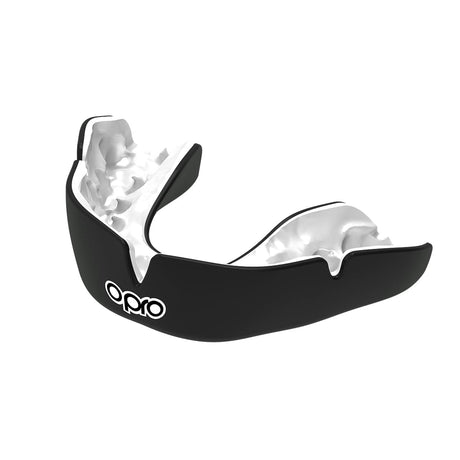
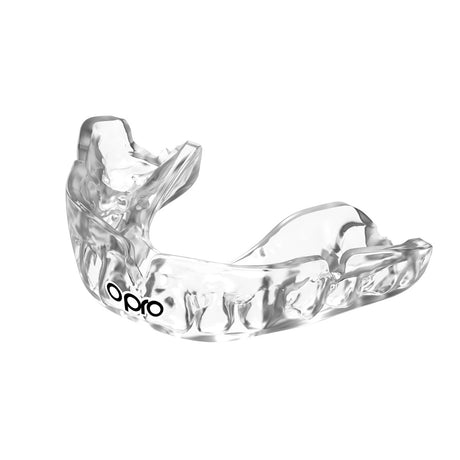
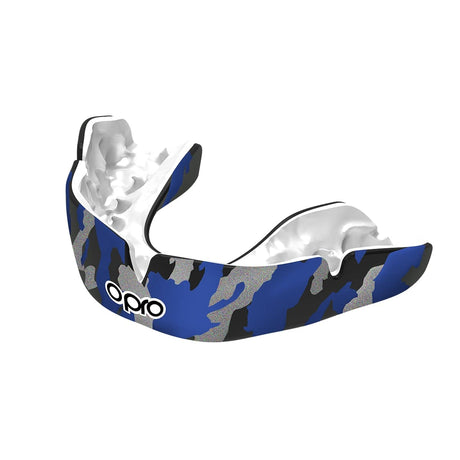
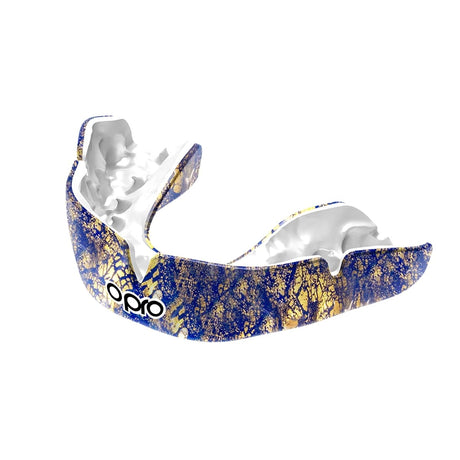
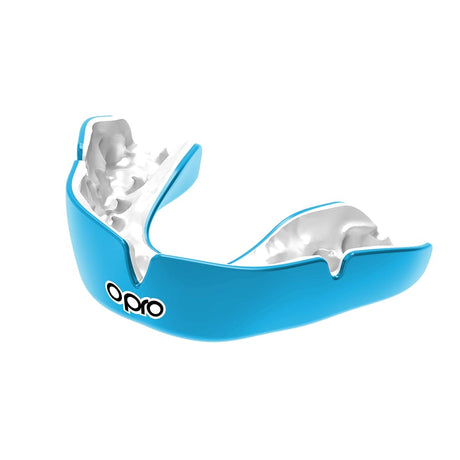
The OPRO Instant Custom-Fit mouthguard is the best option for boxing beginners. It stays in place, is comfortable, lets you breathe, and isn’t too expensive.
I’m not saying you need to spend a lot on gear when you’re starting out. I still use second-hand gloves and shorts from the club. But a good boxing gum shield is worth spending a bit more on. You wear it every time you spar. It’s in your mouth, affecting how you breathe and move. It’s worth getting right.
Would I buy OPRO again? Absolutely. I’ve already recommended it to two others at the gym who had the same problems I did. One of them tried it and messaged me after his next sparring session: "Mate, you were right. Night and day."
Conclusion
I’m still a beginner and have a long way to go before I’m any good at boxing. But I’ve learned this: the right gear won’t make you a better fighter, but the wrong gear will definitely hold you back.
If you’re just starting sparring and need a boxing mouthguard that works, skip the cheap options and go straight for the OPRO Instant Custom-Fit. It should have been my first purchase, and it’s the only mouthguard I’d recommend to anyone starting out in a boxing gym.
Get the fit right, forget about your gum shield, and focus on learning to box. That’s what matters.
About the author: Jay Carter is a warehouse team leader from Leeds who started boxing three months ago at a local amateur club. He writes about the practical side of learning to box as an adult beginner, sharing the kit lessons and training experiences.